
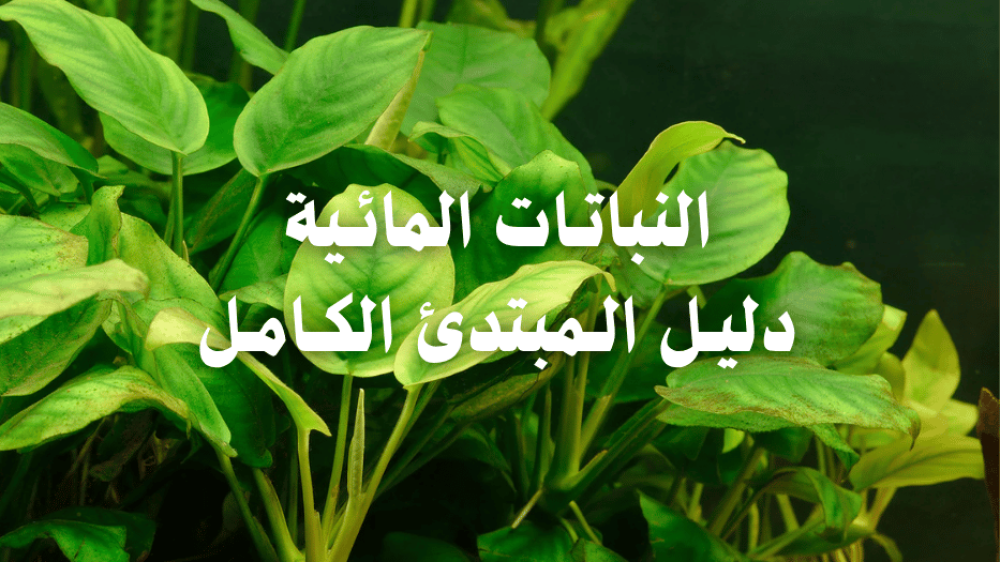
Aquatic Plants (The Complete Beginner's Guide)
Plants aren't just decorations—they're a living part of the aquarium. They improve water quality, reduce algae, and give fish and shrimp a natural hiding place. And the best part? Most don't require CO2 or expensive equipment.
1 - Why put plants in?
- It absorbs ammonia and nitrates — naturally cleaning the water.
- Algae reduce competition for food.
- Provides oxygen for fish
- It provides hiding places for shrimp and small fish.
- The aquarium has transformed from a "collection of equipment" to a "living environment".
2 — Types of plants according to their location in the basin
Background plants are grown in the back and grow upwards.
- Vallisneria — a tall, water-moving, fast-growing grass that requires no CO2
- Amazon Sword — Broad, large leaves, strong personality in the aquarium, needs nutritious soil
- Hornwort — very fast, cleans water very efficiently, floats or grows
Midground plants give depth and balance to the view.
- Anubias — the strongest and most resilient, tolerates any light, can be attached to wood or stone — do not plant it in soil
- Java Fern — Long, elegant leaves, no soil required, can be attached to wood or stone
- Cryptocoryne (Crypt) — slow-growing but very beautiful, colors from green to brown, tolerates low light
Foreground plants cover the bottom of the basin and give the appearance of a green carpet.
- Dwarf Sagittaria — a short grass that spreads on its own, easiest for beginners
- Java Moss — it attaches to any surface, shrimp love to play in it, it's practically indestructible
- Pearl Weed — a beautiful green carpet that grows even without CO2
Floating plants float to the surface and provide natural shade.
- Frogbit — Beautiful round leaves, fast, loves shrimp
- Duckweed — the fastest growing, powerfully cleans water, but needs control because it spreads a lot
3 — Planting Method
Plants grown in soil: Plant the roots in the soil, leaving the stem exposed. If the stem is submerged, it will rot.
Plants that can be attached to wood or stone (Anubias, Java Fern): Tie them with string or special pot glue. After a while, they will attach themselves.
Floating plants: Place them on the surface and let them move. But watch them so they don't cover the entire surface — fish need air.
4 — Lighting
The plant needs light to live — that's the most important thing.
- Low light: Anubias, Java Fern, Java Moss, Crypt — suitable for any normal lighting
- Medium light: Vallisneria, Amazon Sword, Dwarf Sagittaria — require reasonable lighting
- High light: Advanced carpet plants — not for beginners
The rule: 8 hours a day on a timer — no more, no less. Too much light brings algae.
5 — Fertilization
Plants need food just like any living organism.
Liquid fertilizer: Add to the water weekly. Suitable for all plants, especially those that are supported by wood or stone.
Root Tabs: Tablets that are placed directly under the soil near the roots. Suitable for Amazon Sword, Vallisneria, and Crypt.
For beginners: Start with small quantities. Increasing them will cause algae growth.
Some plants may not need fertilization until the effect of the agricultural soil has ended (1-3 years).
6 — Do you need CO2?
No, it's not necessary to start with.
The plants we mentioned live without artificial CO2. They obtain carbon dioxide from:
- Fish breathing
- Natural remains decompose in the basin
- air exchange on the water's surface
CO2 accelerates growth and improves colors — but it is for the second stage, not the first.
7 — Weekly maintenance
- Remove yellow or dead leaves immediately — they pollute the water.
- Trim back tall plants before they cover the entire basin.
- Add liquid fertilizer once a week
- Observe the color of the leaves — yellowing indicates a lack of food.
The most common mistake beginners make with plants
He buys a beautiful plant from the store and puts it in ordinary soil without fertilizer and with weak lighting — and is surprised to find that it has died.
Solution: Choose the right type of lighting and equipment you have, and add fertilizer from the beginning.
Browse the Aqua Heaven store — ready-made plants and pots from day one